
Neuro Gum vs Run Gum: Caffeine, Ingredients, and Cost
One person needs a mild boost before a wall of afternoon meetings. Another wants caffeine before a run without carrying a can or coffee cup.
That is the real Neuro Gum vs Run Gum split. Both are marketed as portable, sugar-free caffeinated gums, but they fit different moments.
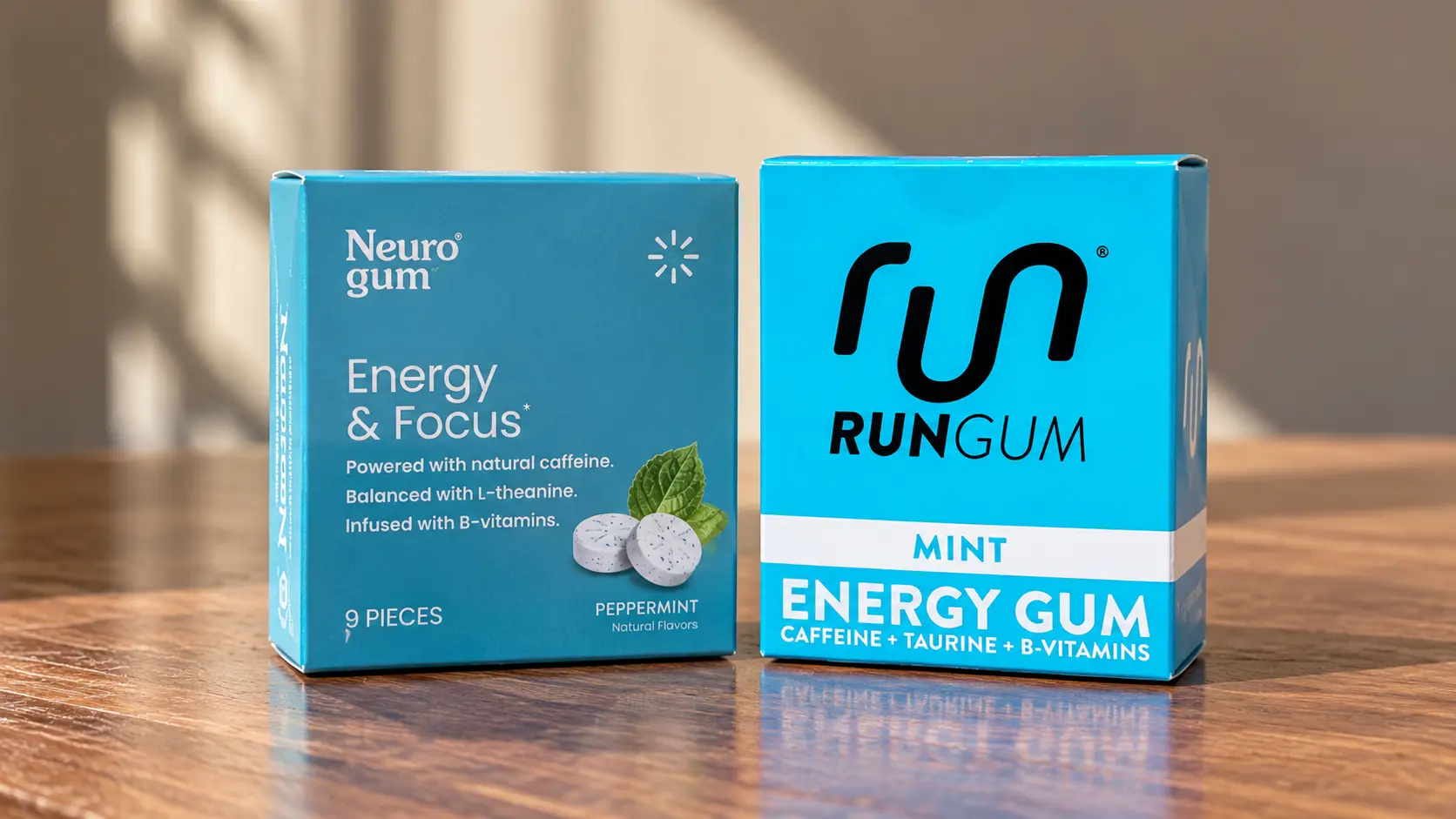
Standard Neuro Gum is advertised with 40 mg of caffeine and 60 mg of L-theanine per piece. Standard Run Gum is advertised with 50 mg of caffeine and 20 mg of taurine per piece. Here is how the doses, ingredients, speed, cost, flavors, and everyday tradeoffs compare using label claims and listed-price snapshots rather than a hands-on taste test or independent product testing.
Key Takeaways: Neuro Gum vs Run Gum
- Neuro Gum vs Run Gum has no universal winner, and the standard-formula comparison should turn on the exact pack’s caffeine amount, supporting ingredients, and total price rather than branding alone.
- Caffeinated gum is convenient, but a small gum-versus-coffee trial found no significant difference in time to peak caffeine concentration, so faster effects are not guaranteed for either brand.
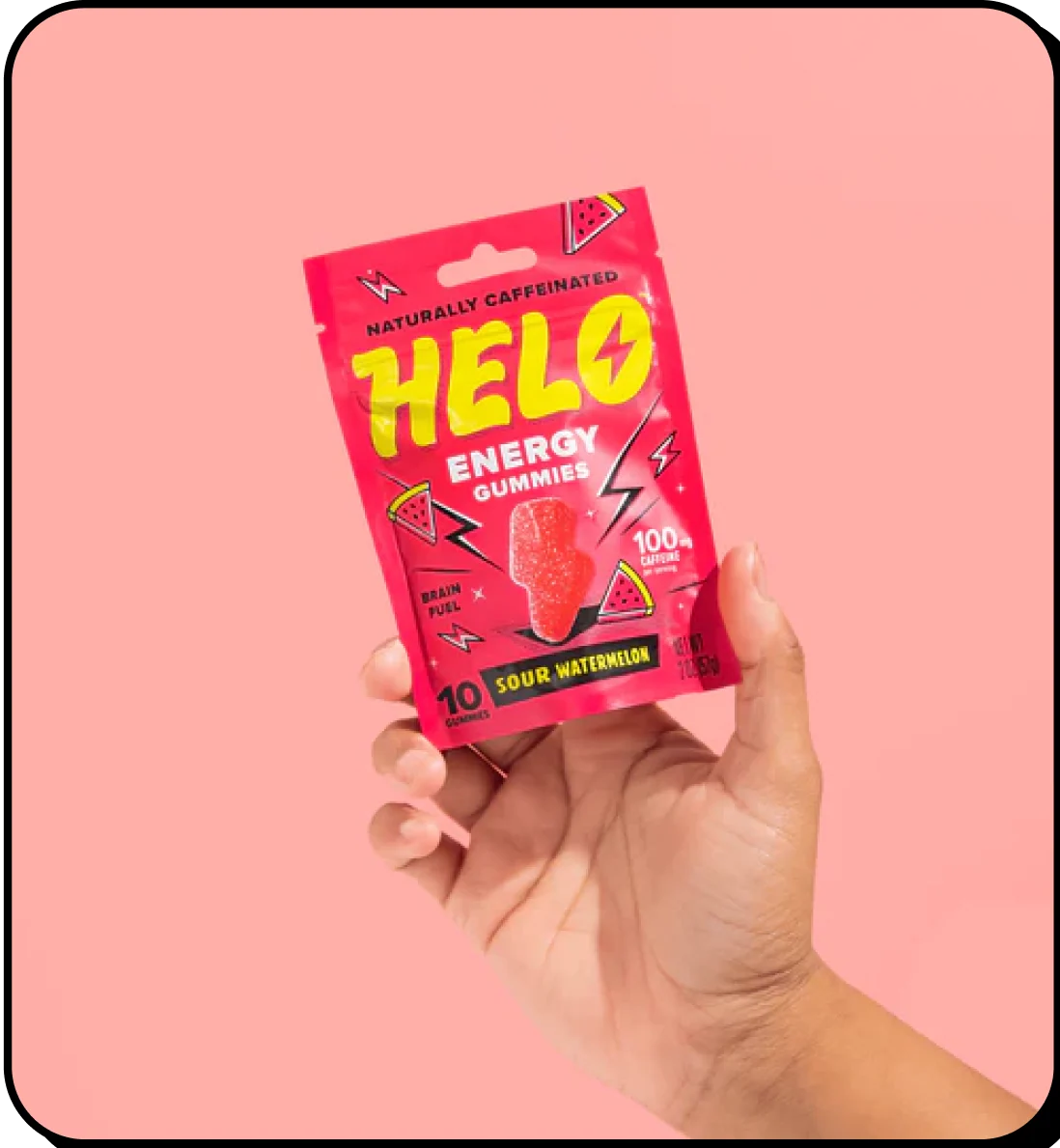
- MELO Labs’ HELO Energy Gummies provide an edible alternative with a labeled two-gummy serving of 100 mg caffeine from green tea and 100 mg L-theanine, making serving size central to the format choice.
- Total daily caffeine matters more than the package format, and FDA guidance on adult intake allows for substantial individual differences rather than offering a target for everyone.
Neuro Gum vs Run Gum: Quick Verdict
Neuro may suit readers seeking its advertised lower-dose formula with L-theanine. Run Gum may suit readers seeking its advertised slightly higher standard dose and taurine. Neither formula nor a current price advantage has been independently verified here, so the label-based comparison cannot establish a tested winner.
Neither wins for everyone. Your tolerance, routine, flavor preference, and budget decide. If gum is not your preferred format, caffeine gummies belong in a separate category because serving sizes and ingredient blends differ.
The standard-formula comparison keeps per-piece amounts separate from per-pouch totals. Advertised extra-strength options belong in a separate comparison, so a 100 mg piece is not confused with a standard piece.
Neuro Gum vs Run Gum at a Glance
The table separates advertised standard formulas from listed-price snapshots. The competitor figures remain unverified independently, and the prices do not establish a current checkout advantage. Before ordering, check the exact flavor, pack, ingredient label, price, and stock.
| Feature | Neuro Gum | Run Gum | MELO HELO Energy Gummies |
| Caffeine per piece | 40 mg | 50 mg | 100 mg per two-gummy serving |
| Other active | 60 mg L-theanine | 20 mg taurine | 100 mg L-theanine per two-gummy serving |
| B vitamins | B6: 41% DV, B12: 100% DV | B6: 2.2 mg, B12: 3 mcg | Check the exact flavor label |
| Sugar | Sugar-free | Sugar-free, check the exact flavor label | Check the exact flavor label |
| Pack size | 54 pieces | 24 pieces (12 two-piece pouches) | 2-count sampler, 10-pack, or 30-pack options |
| Listed one-time price | $24.99 | $22.49 | Varies by pack, check current listing |
| Cost per piece | About $0.46 | About $0.94 | Varies by pack |
| Cost per 100 mg caffeine | About $1.16 | About $1.87 | Varies by pack price |
| Flavors | Peppermint, spearmint, cinnamon, wintergreen, variety, limited releases vary | Mint, wintergreen, bubblegum, fruit, cinnamon, variety | Blue Razz, Sour Watermelon, Sour Green Apple, Strawberry |
| Best fit | Lower-dose, focus-positioned use | Slightly stronger dose and active routines | Edible alternative when gum is not your format |
Using the quoted pack prices and advertised caffeine amounts, Neuro works out to about $0.46 per piece and $1.16 per 100 mg of caffeine. Run Gum works out to about $0.94 per piece and $1.87 per 100 mg. The advertised standard-dose difference is 10 mg per piece, but the calculations do not verify the underlying label or price claims.
How Caffeine and Ingredients Change the Experience
Neuro’s advertised standard formula combines caffeine with L-theanine, and Run Gum’s combines caffeine with taurine. Across the best caffeine gum options, compare the complete label rather than assuming that the supporting ingredient determines the result.
Neuro uses L-theanine. Run Gum uses taurine. Those ingredients shape each brand’s positioning, but neither formula guarantees a certain feeling, focus level, or athletic result.
Both gums advertise vitamins B6 and B12. Vitamin B6 supports metabolism, and vitamin B12 is involved in energy metabolism. Extra B12 does not increase energy in people who already get enough. Those roles do not establish an instant effect from either gum.
Neuro Gum’s Formula: 40 mg Caffeine Plus L-Theanine
Neuro’s current product page lists 40 mg of natural caffeine, 60 mg of L-theanine, vitamin B6 at 41% of the Daily Value, and vitamin B12 at 100% of the Daily Value per standard piece. That combination puts Neuro in the lower-dose, focus-positioned lane.
The peppermint label names sorbitol, xylitol, sucralose, monk fruit, and steviol glycosides. Neuro describes the gum as vegan, gluten-free, sugar-free, and aspartame-free.
Flavor formulas can differ. The pack in your hand gets the final vote.
L-theanine sounds calm and focus-friendly on paper. Still, an ingredient rationale is not proof that every user will feel steady, jitter-free, or locked in. Neuro is best judged as a measured caffeine format with an added amino acid, not a productivity cheat code.
Run Gum’s Formula: 50 mg Caffeine Plus Taurine
Run Gum’s supplement facts list 50 mg of caffeine, 20 mg of taurine, 2.2 mg of vitamin B6, and 3 mcg of vitamin B12 in each standard piece. The brand describes two pieces per pouch, which would total 100 mg of caffeine. Keep the advertised per-piece and per-pouch numbers separate when comparing doses.
The label lists sorbitol, mannitol, xylitol, natural flavors, and sucralose. That matters if sugar alcohols or sweeteners are personal dealbreakers. Check your flavor, since formulas may vary.
Run Gum leans hard into running, workouts, and performance settings. That branding may fit your routine, but taurine and B vitamins do not turn one piece into a guaranteed endurance upgrade.
Standard vs Extra Strength: Compare Like With Like
Both brands offer extra-strength gum with 100 mg of caffeine per piece. Those versions sit in a different dosing lane from the standard 40 mg Neuro and 50 mg Run formulas, with different pack sizes, prices, and supporting ingredient amounts.
Start with the standard comparison if you are unsure whether you want 100 mg at once. More caffeine is not automatically more useful, especially when coffee, tea, pre-workout, or an energy drink is already somewhere in the day.
How Fast Does Caffeine Gum Work?
Caffeine gum has no guaranteed onset time, and a small gum-versus-coffee trial found no significant difference in time to peak caffeine concentration.
The format needs no brewing, shaker, or can. Timing varies by person and product, and a caffeine vape uses a different delivery route that should not be treated as equivalent to gum.
A randomized crossover study compared an investigational caffeinated gum with instant coffee in 16 healthy adults at roughly 50 mg of caffeine each. Researchers found no significant difference in time to peak concentration. The gum released about 18% less caffeine than its formulated dose. The trial did not test Neuro Gum or Run Gum.
That result does not prove every gum and coffee behave the same. Formulation, chewing time, saliva, food, and the drink itself can change the experience.
The finding does not establish a speed advantage for Neuro Gum or Run Gum. Portability is easy to assess, but a guaranteed instant effect remains unproven.
Caffeine Gum Cost per Piece and per 100 mg
At the quoted $24.99 price for Neuro’s 54-piece pack, $24.99 divided by 54 is about $0.46 per piece. Using the advertised 40 mg per piece gives about $1.16 per 100 mg. These are conditional calculations, not independently verified current prices or doses.
At the quoted $22.49 price for Run Gum’s box of 12 two-piece pouches, $22.49 divided by 24 is about $0.94 per piece. Using the advertised 50 mg per piece gives about $1.87 per 100 mg. Verify the live pack and checkout total before treating that snapshot as a buying comparison.
Neuro is cheaper per piece and per 100 mg only if those pack prices and label amounts apply. “Better value” still depends on what you value.
Run’s extra 10 mg per piece, taurine formula, flavor options, and workout-first identity may matter more than the raw caffeine math. Subscriptions, shipping thresholds, discounts, and stock can change the checkout total.
Taste, Packaging, and Everyday Convenience
Neuro currently lists peppermint, spearmint, cinnamon, wintergreen, a variety pack, and occasional limited releases. Run Gum offers mint, wintergreen, bubblegum, fruit, cinnamon, and a variety option. Caffeine gum reviews can flag recurring flavor or texture themes, but they cannot make taste objective. No taste crown here because we did not chew through both lineups, and flavor is personal anyway.
Both fit in a pocket, let you count caffeine piece by piece, and need no drink preparation. Both leave you with used gum to wrap or throw away. That tiny detail becomes surprisingly relevant in a meeting, on public transit, or halfway through a run with no bin nearby.
For Work, Study, Driving, and Travel
Neuro’s 40 mg increments are easier to adjust when you want a mild top-up instead of a coffee-sized commitment. The smaller step can suit a long drive, airport delay, study block, or the 2 p.m. meeting where your brain starts buffering.
Our Neuro Gum review takes a deeper look at that formula, value, and evidence. Whatever you pick, count the caffeine already coming from coffee, tea, soda, pre-workout, and energy drinks.
For Running and Workouts
Run Gum may appeal before or after a workout if you prefer its advertised 50 mg standard dose, taurine formula, and two-piece pouch. The format needs no drink preparation, but the formula does not establish that Run Gum is the best energy gum for running.
Still, the recommendation comes down to preference, with no performance result guaranteed. Some runners may prefer Neuro’s smaller 40 mg increments.
Others may skip gum entirely. Tolerance, timing, flavor, chewing comfort, and total caffeine matter more than the logo on the pouch. For non-gum choices, coffee alternatives can help compare lower-prep and lower-caffeine formats.
Safety, Labels, and Daily Caffeine Intake
FDA guidance cites 400 mg per day for most adults as an amount usually not associated with negative effects. The number offers context rather than a daily target. Sensitivity varies, and pregnancy, medications, health conditions, and the speed at which your body clears caffeine can change what feels comfortable.
Count every source. One Run Gum pouch contains 100 mg.
Ten standard Neuro pieces total 400 mg, but that arithmetic is not a suggestion to chew ten pieces. Watch for jitters, anxiety, sleep disruption, a fast heartbeat, upset stomach, nausea, or headache.
Portable and sugar-free does not make either gum risk-free or right for everyone. Broader caffeine statistics can add context, but your total daily intake matters more than a population average. If you have a health concern or medication question, ask a qualified clinician who knows your situation. And if late-day caffeine keeps stealing sleep, the next morning’s energy problem may be yesterday’s solution wearing a fake mustache.
How Do You Compare Caffeine Gum With Energy Gummies?
Compare caffeine gum and energy gummies by the labeled amount you will actually take, not by package size. One standard Neuro piece lists 40 mg, one standard Run Gum piece lists 50 mg, and a two-gummy serving of MELO Labs’ HELO Energy Gummies lists 100 mg of caffeine from green tea. That puts a full HELO serving on the same caffeine line as one Run Gum pouch, not one standard piece.
Gum gives you smaller 40- or 50-mg steps. HELO uses a two-gummy serving and skips the used-gum problem, but the larger labeled amount needs the same caffeine math as coffee or pre-workout. Count the whole day first, then pick the format and serving that fit your routine.
Which Energy Gum Fits Your Routine?
For the final Neuro Gum vs Run Gum choice, start with the dose you want now, not the loudest promise on the package. Then check the supporting ingredients, flavor, cost, dietary preferences, and where you will use it. A gym-bag favorite and a desk-drawer favorite do not have to be the same product.
Choose Neuro Gum for Smaller Doses and L-Theanine
Neuro may suit readers who prefer its advertised 40 mg caffeine increments and L-theanine formula. Treat the flavor selection and price comparison as label-based shopping information, with no independently verified advantage established here.
Neuro makes sense if 50 mg feels like more than you want from one piece. Keep expectations grounded. “Focus” is positioning, not a guaranteed personal result.
Choose Run Gum for a Higher Standard Dose and Taurine
Run Gum may suit readers who prefer its advertised 50 mg per standard piece, taurine, and two-piece pouch. The athlete-oriented positioning may fit your routine, but it does not prove a performance advantage.
Run may win if its flavors or packaging work better for you. The quoted-price calculation puts Run higher per piece and per 100 mg, but that ranking depends on the exact pack and current checkout price.
Consider HELO Energy Gummies If Gum Is Not Your Format
HELO Energy Gummies are an edible alternative when gum is not your format, with a labeled two-gummy serving of 100 mg caffeine from green tea and 100 mg L-theanine. The serving size needs its own caffeine calculation, and the edible format skips used-gum disposal.
Format drives this choice. Compare the HELO label with the caffeine already in your day, then pick the dose and delivery style that fits your real routine. Small decision, fewer surprises.
If gum wrappers keep piling up in your bag, the format may be the problem. MELO Labs’ HELO Energy Gummies offer an edible option with a labeled two-gummy serving of 100 mg caffeine from green tea and 100 mg L-theanine. Check the HELO label against the caffeine already in your coffee or pre-workout, then see if the gummy format fits your day.
Leave a comment