


Can You Overdose on Melatonin?
Yes, you can overdose on melatonin, but probably not in the way you think. A melatonin overdose isn't likely to be life-threatening, but taking too much can cause headaches, nausea, dizziness, and even make your sleep problems worse. Whether you're taking pills, gummies, or melatonin vapes, it's important to understand the right dose, the warning signs of taking too much, and what to do if it happens.
In this article, we'll cover everything you need to know about melatonin overdoses, including symptoms to watch for, risks for children, drug interactions, and what the research actually says. We'll also explain why you're less likely to overdose on melatonin in vape form than in any other form, and how we made MELO Air the safest and most effective melatonin vaporizer you can buy.
At a glance:
How Melatonin Dosing Works

Taking too much melatonin can actually have the opposite of the intended effect, creating additional sleep problems. A melatonin overdose can disrupt your circadian rhythm (sleep wake cycle) and keep you from being able to rest. Or it might just make you extra groggy the next day. It’s best not to find out what effect too much melatonin will have on you. So how do you avoid this?
When it comes to overdosing on anything, what you need to know is how much of the substance is considered one dose, and how many doses are safe to take at once. For melatonin, this can vary widely depending on the kind of melatonin supplement you’re taking. Here, we’re going to consider the ideal dose of melatonin, and how the type of supplement matters.
The Ideal Dose of Melatonin (It’s Less Than You’d Think!)
According to a study from the Senior Care Pharmacist, the optimal dose of melatonin for older adults is between 1 mg and 6 mg of melatonin. Since adults tend to produce less melatonin as they get older, the ideal dose for younger adults is likely even smaller. The Sleep Foundation recommends a dose between 0.5 mg and 5 mg for most adults.
Of course, these are ranges, so how do you figure out where you fit within that range? Experts generally recommend starting with as small a dose as possible, and slowly working your way up to higher doses only if the lower doses aren’t effective for you.
This might mean starting with a dose of just 0.5 mg or 1 mg of melatonin. If you’ve tried this small dose at least a couple of times and still have trouble sleeping, you can add to it in 0.5-mg or 1-mg increments. With each new increment, give it another couple of tries to see if it can help you fall asleep before deciding it doesn’t work and adding a little more.
If you’re taking more than 6 mg of melatonin and still not noticing any difference, it’s possible your habits are interfering with the effectiveness of the melatonin. Make sure you’re not exposing yourself to bright lights at night and limiting screen time before bed. You might also want to talk to a sleep specialist to rule out potential sleep disorders.
Because too much melatonin can have the opposite effect, you’ll want to start small and keep your nighttime habits in check. Some adults may need higher doses, but you should only try those higher doses if you’ve carefully tried lower doses to no effect.
So, how does vaping fit into the picture? We’ll discuss the typical doses of different melatonin supplements next.
How Much Melatonin Is in Different Supplements
Melatonin pens and diffusers tend to have the least amount of melatonin in them compared to other melatonin supplements. This is because they’re so effective that you don’t need as much (more on this later), and this is also why you’re less likely to overdose on them. For instance, our MELO Air melatonin vaporizers have just 1.3 mg of melatonin per serving, and a serving is ten puffs.
As you’ll notice from reading the reviews, most customers don’t even need 10 puffs. Many customers say that just two or three puffs is enough for them to sleep well and not feel groggy at all the next day. That means these customers are getting a dose of less than 0.5 mg of melatonin, and they’re finding it effective!
Meanwhile, melatonin liquids tend to have a little more. Our liquid melatonin supplement, MELO Sip, has 4.3 mg of melatonin per serving. It comes in powdered form, in individually-wrapped packets that you add to water (however much water you want). If you want to start with a smaller dose, you can try using half or a quarter of the packet.
Watch Out for High-Dosage Pills and Gummies
Finally, the melatonin supplements with the most melatonin are generally pills and gummies. You can find pills and gummies with as little as 1 mg of melatonin, but some go as high as 10 mg of melatonin. Many have 5 mg or more. This information is usually displayed on the front label, but make sure to check the back panel to see how many pills/gummies are in one serving.
As we just saw, 10 mg of melatonin is likely far too much for most people. There’s no reason to buy a supplement with that much melatonin. It’s much easier to add more pills or gummies than it is to break up a pill or gummy into smaller pieces.
Signs and Symptoms of a Melatonin Overdose
So how do you know if you've taken too much melatonin? According to the Sleep Foundation and Healthline, common signs of a melatonin overdose include:
- Headaches
- Nausea or vomiting
- Dizziness
- Excessive daytime drowsiness or grogginess
- Vivid dreams or nightmares
- Irritability or mood changes
- Stomach cramps or diarrhea
- Blood pressure changes
- Joint pain
In more severe but rare cases — especially when melatonin is combined with other substances — overdose symptoms can include difficulty breathing, seizures, or loss of consciousness. These require immediate medical attention.
For most people, the most common sign that they've taken too much is simply feeling groggy, sluggish, and "off" the next day. If you're waking up feeling worse than before you took melatonin, you may be taking too much.
Researchers have never been able to establish a lethal dose (known as an LD 50) for melatonin, and according to WebMD, very high doses weren't even fatal in animal studies. So while a melatonin overdose can make you feel lousy, it's extremely unlikely to be life-threatening on its own.
What to Do If You Take Too Much Melatonin
If you think you or someone you know has taken too much melatonin, don't panic. Most mild melatonin overdoses can be managed at home. According to the Sleep Foundation, here's what to do:
- Stop taking melatonin and allow the supplement to clear your system naturally.
- Don't try to induce vomiting. Wait in a safe, comfortable place for symptoms to pass.
- Stay hydrated and rest.
- Call Poison Control at 1-800-222-1222 if you're unsure how much was taken or if symptoms feel concerning. They can walk you through your specific situation.
- Seek emergency medical attention immediately if you experience difficulty breathing, seizures, or can't wake up.
Common symptoms like drowsiness, headache, and nausea typically resolve within a few hours as the melatonin works its way out of your system.
How to Avoid Overdosing on Melatonin Inhalers

Because melatonin vaporizers tend to have very little melatonin per serving, you are very unlikely to overdose on them. With MELO Air, you’d have to take upwards of 40 puffs before getting above 5 mg of melatonin. That’s a lot of puffs.
That said, you definitely don’t want to sit around mindlessly vaping a melatonin vape pen. It’s not a good sign if you’ve lost count of how many puffs you’ve taken. The best way to avoid overdosing on a melatonin inhaler is to just keep track of your puffs and make sure not to take more than 10 at a time. Start with two or three, and work your way up if that’s not working.
You may also be wondering how long to inhale the vaporizer for a single puff. It’s a fair question: Measuring puffs is not an exact science. Our best advice is to keep the puffs relatively short. Inhaling really deeply might give you the equivalent of two or three puffs, so keep that in mind when trying a melatonin diffuser pen.
By the way, remember that gummies and pills can be inexact, too. Despite the fact that they’re easier to measure, you might not actually get the amount that’s advertised on the label. This is because pills and gummies don’t have great bioavailability. In fact, a clinical trial from the Journal of Clinical Pharmacology found melatonin pills had an average bioavailability of 15%.
To put this in perspective, a 10-mg melatonin pill might only give you 1.5 mg of melatonin. That means the vast majority gets wasted! Of course, your body won’t conform to the averages exactly, so you may absorb 4 mg, or 1 mg. Either way, it’s pretty tough to find the right dose — and you definitely don’t want to double up on pills or take a higher dose “just in case”, since you might end up overdosing.
This is another reason why we recommend liquids and vapes over pills and gummies. Liquids and vapes are absorbed much more quickly and thoroughly than pills or gummies, so you don’t need to take as much, making you less likely to overdose.
In fact, according to Medicare Europe, liquids have an average bioavailability of 98%, and they can be absorbed in as little as 1-4 minutes (though it may take longer for you to feel the effects). With vaporizers, there is both anecdotal evidence as well as a theoretical reason why they would be even faster-acting and more bioavailable.
Since inhaled substances don’t need to pass through your digestive system, they can get into your bloodstream right away, allowing them to work faster. Pills and gummies need at least half an hour to be broken down and absorbed by your stomach and small intestine.
So, go ahead and try a melatonin diffuser pen, knowing you won’t overdose as long as you’re counting your puffs. If you’re like most customers, you won’t even need a full dose.
Try MELO Air for All Your Melatonin Needs
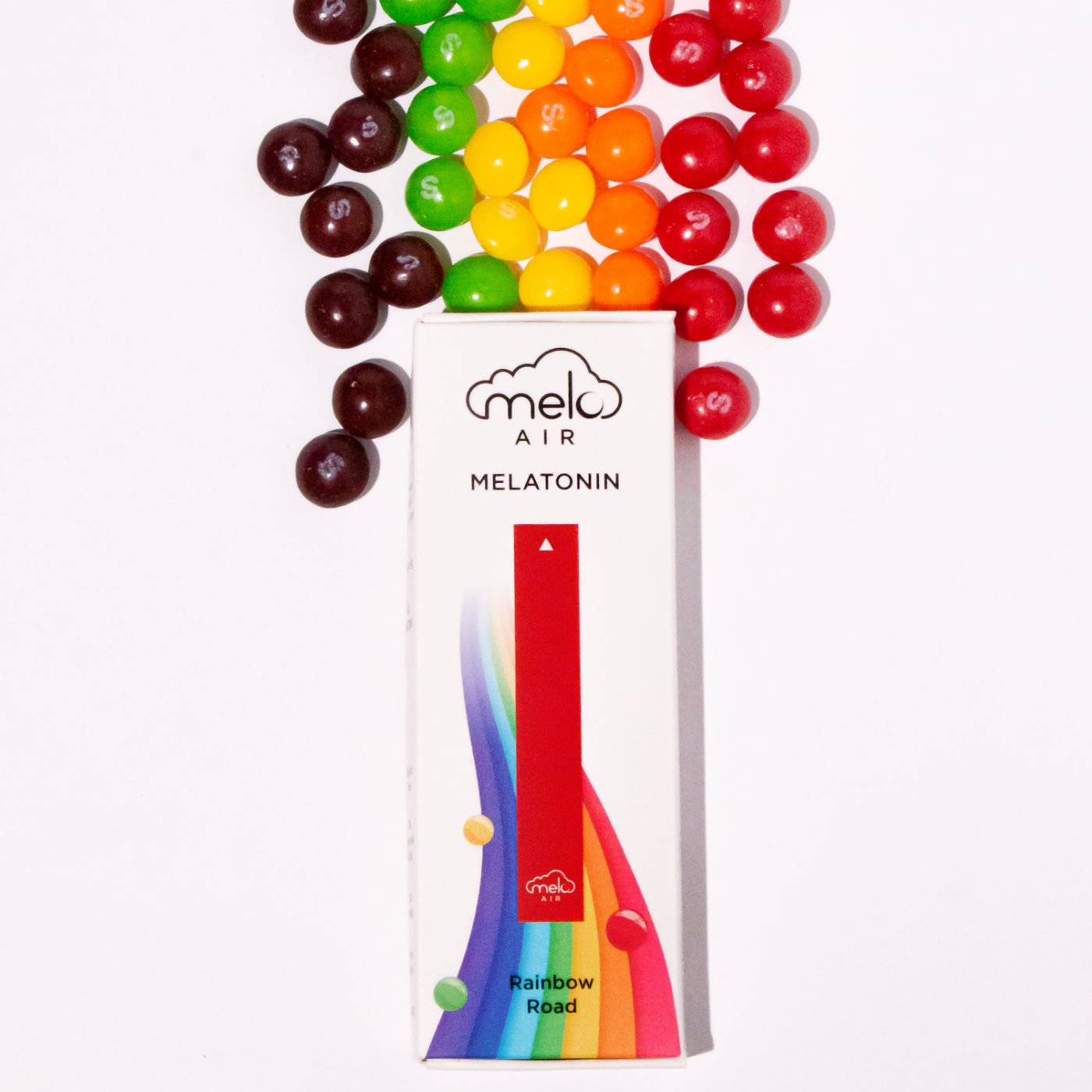
In short, melatonin inhalers are likely your best bet for avoiding overdosing on melatonin. They’re also the fastest-acting melatonin supplements (or sleep aids of any kind) on the market. Just make sure not to go over 10 puffs, and keep your puffs relatively short.
At MELO Labs, we’re proud to tell you what’s in our melatonin vaporizers. MELO Air has three simple ingredients: melatonin, organic vegetable glycerin, and natural flavors. That’s it! Unlike other melatonin vaporizers, there’s no propylene glycol, making these very unlikely to irritate your lungs. And there’s no vitamin E acetate, nicotine, or anything else that might be harmful.
Plus, MELO Air comes in more flavors than any other melatonin vaporizer pen on the market. You have your choice of 10 customer-approved flavors. Try a few to see which one is your favorite.
We also offer MELO Sip, for those who are on the fence about vaping (or who just want a slightly higher dose of melatonin). Apart from melatonin, MELO Sip contains additional ingredients to boost relaxation: chamomile extract, valerian root extract, l-theanine, and GABA as well as sleep-enhancing vitamins and minerals, making it a very helpful sleep aid.
MELO Sip comes in four awesome flavors, but it is sweetened only with monk fruit extract. It has no added sugar or sugar alcohols. And the taste is much more pleasant than the bitter tinctures that most other liquid melatonin supplements come in.
Try one or both of our melatonin supplements, and rest assured that you won’t overdose as long as you follow the instructions on the package.
Disclaimer: This article is for informational purposes only and is not intended as medical advice. Always consult with a qualified healthcare professional before starting any supplement, especially if you take prescription medications, are pregnant or breastfeeding, or are considering melatonin for a child. If you think you or someone you know has taken too much melatonin, call Poison Control at 1-800-222-1222 or seek emergency medical attention.
Leave a comment